
Table of Contents
About Quentin Bentz
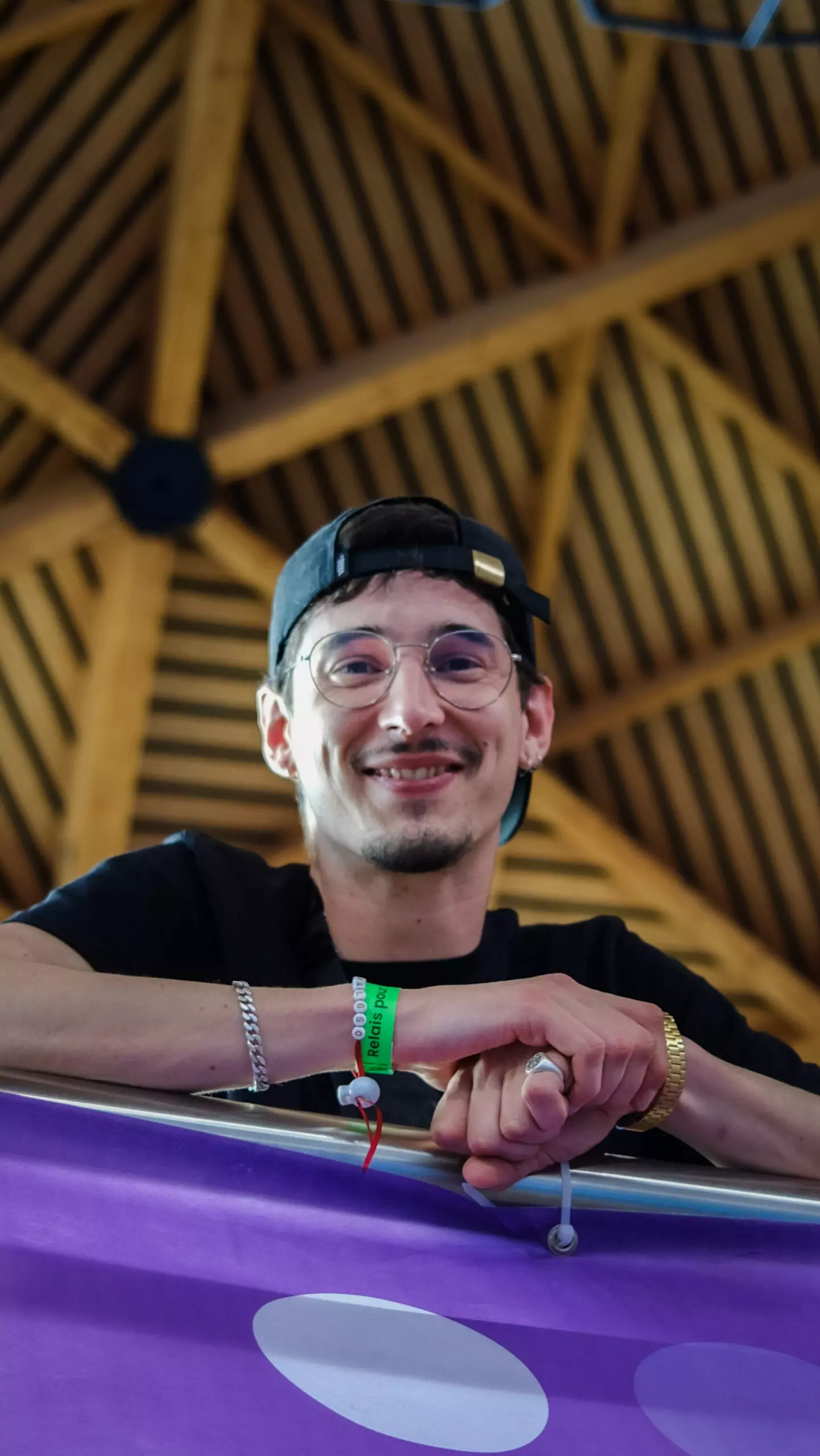
Quentin Bentz is the kind of coach who will endeavor to make you laugh while you’re doing the plank.
He is an adapted physical activity teacher, specialised in rehabilitation. In other words, he’s there to help you move safely, smartly and without judgement.
Despite being quite the entertainer, he’s not here to teach performance. He’s here to teach you how to move in a way that will permit you to do it confidently outside the class too.
At your pace, in your reality.
And yes: he’s also the guy who will keep you smiling while you work. Quentin is very chatty and genuinely cares about people feeling at home in his class.
I’m not in entertainment coaching. It’s more about teaching the skill, so people can learn to do it by themselves safely.
Quentin Bentz – ALGSO coach
His Teaching Style
Meet the Coach 📸
An Interview with Quentin Bentz
Quentin brings big energy, his own special humour and confidence in spades, all with a genuinely warm “you’re safe here” atmosphere.
If you like your workouts with a side of questionable banter, music, and a coach who treats you like a human being (and not a fitness robot), Quentin is your person.
Read on to get to know the chatty coach behind our Pilates and Muscle Strengthening classes.
What is your background?
I’m a teacher in adapted physical activity for health.
It’s basically rehabilitation in a broad sense. I can work with people who are blind, who have a disability, or who simply want to get back into shape. So I adapt to their needs.
So I’m not in entertainment coaching. It’s more about teaching the skill, so people can learn to do it by themselves safely.
What brought you to this path?
I’ve always done sport in my life. The thing is, at secondary school I didn’t know what to do. I did a social and economic baccalaureate. Social interested me, economics… not so much.
So I went to a sports university in France… anatomy, physiology, loads of things.
In my second year I went into ergonomics: designing sports equipment.
I didn’t like it. At all.
Then came the turning point: rehab.
I did a rehab placement… in a hospital with a rehabilitation centre.
I had the person’s file: doctors’ notes, physios’ notes, and what I needed to work on.
Physios don’t always have the time, so they delegate to APA teachers (adapted physical activity teachers) who can do more sessions, longer sessions, etc. and then send them back to the physio.
He then doubled down on this speciality:
In my third year I did my degree in Nancy, where adapted physical activity for health is really the speciality.
Add placements (including at the Rehazenter), and an Erasmus chapter in Germany that was heavily practical:
In Germany they focus much more on practice than theory… more circuits, more adaptations, more exercises…
And the conclusion is very Quentin:
I like sport, I like the social side… so there you go!
How do you adapt your classes to each person’s individual needs?
I don’t necessarily go into precise medical details.
I have knowledge on cancer, consequences, what to do or not do, movements that can be more or less risky depending on surgery and general physical condition.
When someone new comes, I ask how they are… I especially ask about pain and emotional state, because emotional state influences motivation.
It’s important to adapt to individual situations, like breast surgery, scars, skin that is still fragile, etc. So, in the case of press-ups or big ranges of motion, we stay gentle and adapt the movement when and where necessary.
I adapt so the person can still work those muscles without tearing tissue again or creating new problems.
And the approach is flexible too:
It can be an easier class for someone who needs calm, and it can be a harder class for someone who needs difficulty. You just need to talk about it.
How do your classes help people physically, psychologically and socially?
I don’t really separate body and mind… When the body is stimulated, the mind is too.
It’s been scientifically proven that physical activity increases the chances of recovering from cancer… it stimulates the body… it helps with treatment (radiotherapy, chemo, etc.).
And he’s honest about motivation:
Even if at the start of the lesson, you feel monumentally lazy and don’t want to move, you come out and you’re happy.
Then comes the Quentin ingredient: personality.
I spend my time telling stories about my life and talking nonsense… I love dark humour and they love it too.
I can read people very well… when they’re not in a good mood I won’t tease too much… I’ll do it gently.
And they tease me back. It’s a class that’s quite personal.
And ultimately:
If they weren’t happy before the class… they get their breath of fresh air… they feel good physically and mentally… and they’re ready to face what they have to face.
I try to make sure my class isn’t boring.
Do you have any success stories you’d like to share?
I am the success… hahaha.
Then we get real:
It’s a bit particular because obviously there is progress, but I don’t have the quantitative results.
In my class I won’t dramatise their situation more than it already is.
I try to get it out of their head for at least an hour and a half. For me, that’s already a success.
And long-term success?
Those who never did sport before and then keep doing it, that’s amazing.
How do you ensure a good atmosphere?
Music.
Mostly 80s, with some 70s, as long as it has a good beat and good energy.
Bruce Springsteen, Queen, ABBA…
For relaxation I use Japanese anime music… or elevator music so that they focus on my voice. I lower my voice, and I think they like my voice. That’s the feedback I’ve had!
And humour.
They like me… it’s the whole package that I am.
When it’s my birthday they bring me little gifts. We go to restaurants outside of class.
What do you like the most about giving your classes?
The human connection and the smiles. That’s the base.
If there weren’t people, humans, the social side, sharing… it would be boring.
How do you motivate people to come to your classes?
I don’t especially do it. I don’t communicate outside of class. I leave it to them.
Some come every session, others come in phases. It’s up to them. I stay out of that.
They come for the atmosphere.
They come for the effect it has on their mind more than anything.
They know it’s a breath of fresh air every week.
Is there a fun fact about you that no one knows?
Oh no, they know everything.
I tell them my whole life. My private life, my hangovers, my festivals. I’m very indiscreet about my life and I tell my participants everything. So there isn’t anything they won’t know.
Then, after a long minute of reflection:
I must not injure myself for my job…I can’t have a broken foot or hand…but I only ever do things that are dangerous for me and can result in exactly that type of injury. I’m reckless.
In his spare time, you’ll find Quentin at skateboard parks, playing video games, in the middle of a mosh pit or watching horror movies.
A personal message from Quentin:
If you feel like coming along to do some sport, all while spending an enjoyable time in a relaxed and light-hearted atmosphere, don’t hesitate to sign up.
Quentin’s Class Schedule
Activity: Muscle Strengthening and Pilates in Merl
When: Every Wednesday from 9:30am – 11am
Where: École de Merl, “Memer”
Who for: Open to all ALGSO members
Activity: Pilates at the ECG
When: Every Thursday from 2:30pm – 3:30pm
Where: ECG
Who for: Open to all ALGSO members

