
Table of Contents
Most of us have been there. You want to ask a mate how he is really doing, and out comes “Fancy a pint?”. This Movember guide gives you five easy ways to start the all-important conversations surrounding men’s health, and tells you where to find the ALGSO (that’s us, hi!) on 11 November at the Hôpital Kirchberg.
Why this conversation feels so hard
Most of us can spend two hours talking about what was on the news last night, and never mention that we have been sleeping badly for a month. Nobody plans it that way. A lot of friendships are built around doing things together, like a sports game, a pint, or debating absurd theories. That works well until one of you has something on their mind that doesn’t seem to fit in the gaps.
Then there’s the reflex: “Alright?” “Yeah, fine, you?”… It’s the most automatic exchange we have, and most of the time it’s simply habit. The thing is though, that since it runs on autopilot, by the time anyone has thought about opening the door to say how things are really going, the conversation has already moved on to the game, your annoying neighbour 3 doors down or their mum’s cat.
Aside from years of reflex, behind the “fine” there can often be quiet reasons.
He does not want to worry anyone.
It is probably nothing.
It will sort itself out, and if it has not by next month, he will deal with it then.
Plenty of men grew up learning to get on with things and keep their troubles to themselves, so asking for attention can feel like making a fuss. Some subjects, anything to do with the body below the belt, come with an extra layer of embarrassment on top.
To add yet another layer to this epic cake of awkwardness, the person asking can have their own brakes on too.
What if I say the wrong thing?
What if he laughs it off and it gets awkward?
What if I make it worse or offend him?
So we wait for a better moment, and the better moment rarely turns up by itself.
That’s why it helps to arrive with something small and specific instead of hoping the right words will magically appear. A conversation doesn’t need to be long or solemn to matter.
We are not psychologists, so you won’t find deep theories here, but what you will find, are five ways to step-by-step, open the conversations that fit into everyday life, what to say when the answer is still “I’m fine”, and how to tell when a chat should lead to an appointment.
Looking for the background to Movember itself? Our article from last year, Movember, A Movement for Men’s Health, covers where it started and why men’s health matters. This guide picks up from there and gets practical.
Read it once, and you should have a few sentences ready for this Movember month.

Five ways to start the chat:
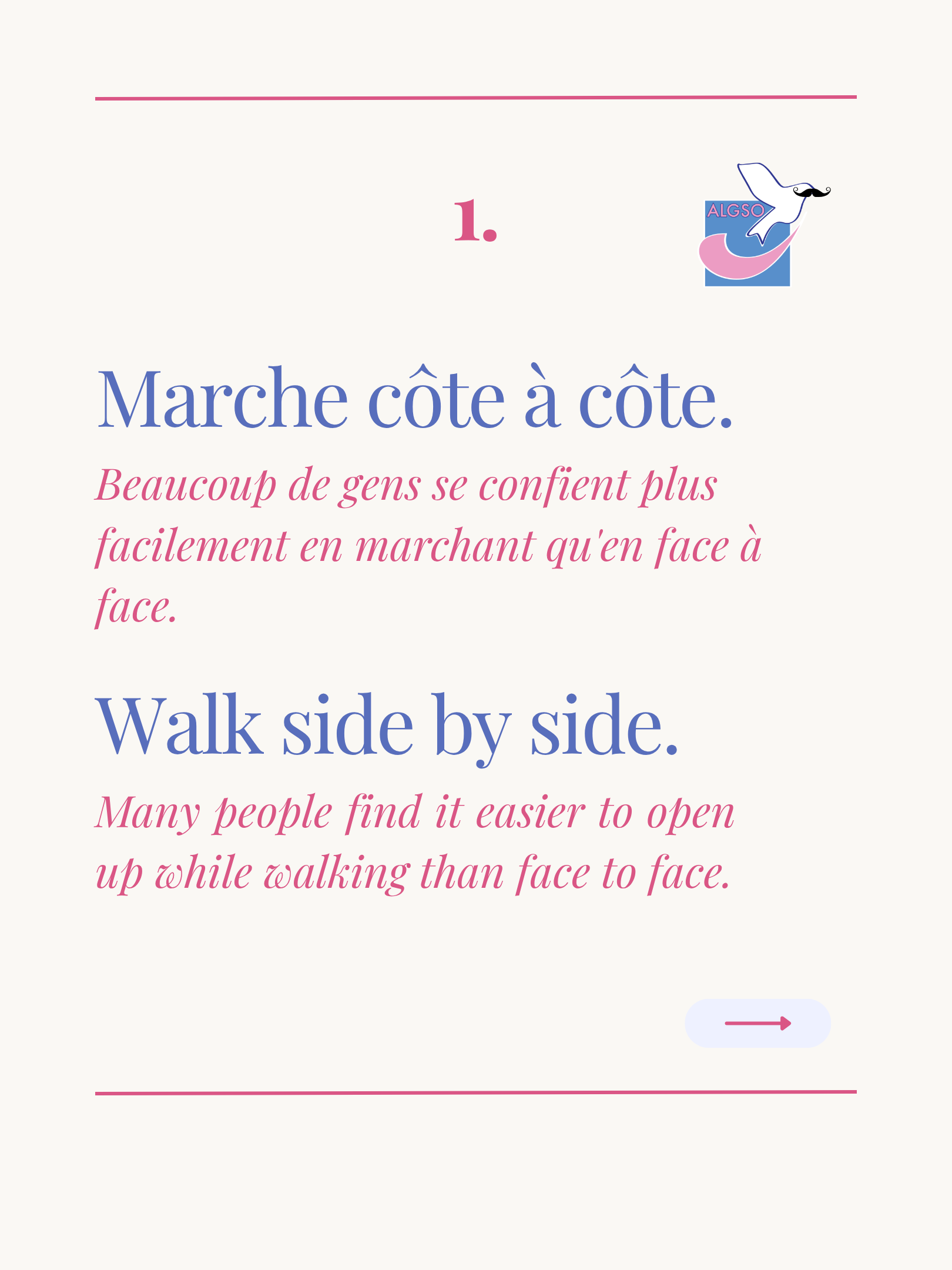
Walk side by side.
Many people find it easier to open up while walking than sitting face to face. You both look ahead, the pressure drops, and silences feel less awkward, because there’s always a dog, a bus or a shop window to look at. The same goes for the car, the kitchen and the washing up. Being next to each other while doing something tends to feel easier than sitting across a table with a “we need to talk” atmosphere.
Invite it casually. “Fancy a walk?” does the job, and you don’t have to announce the topic in advance. Treat the first ten minutes as a warm-up and let them be about nothing in particular. A walk to the shops counts.
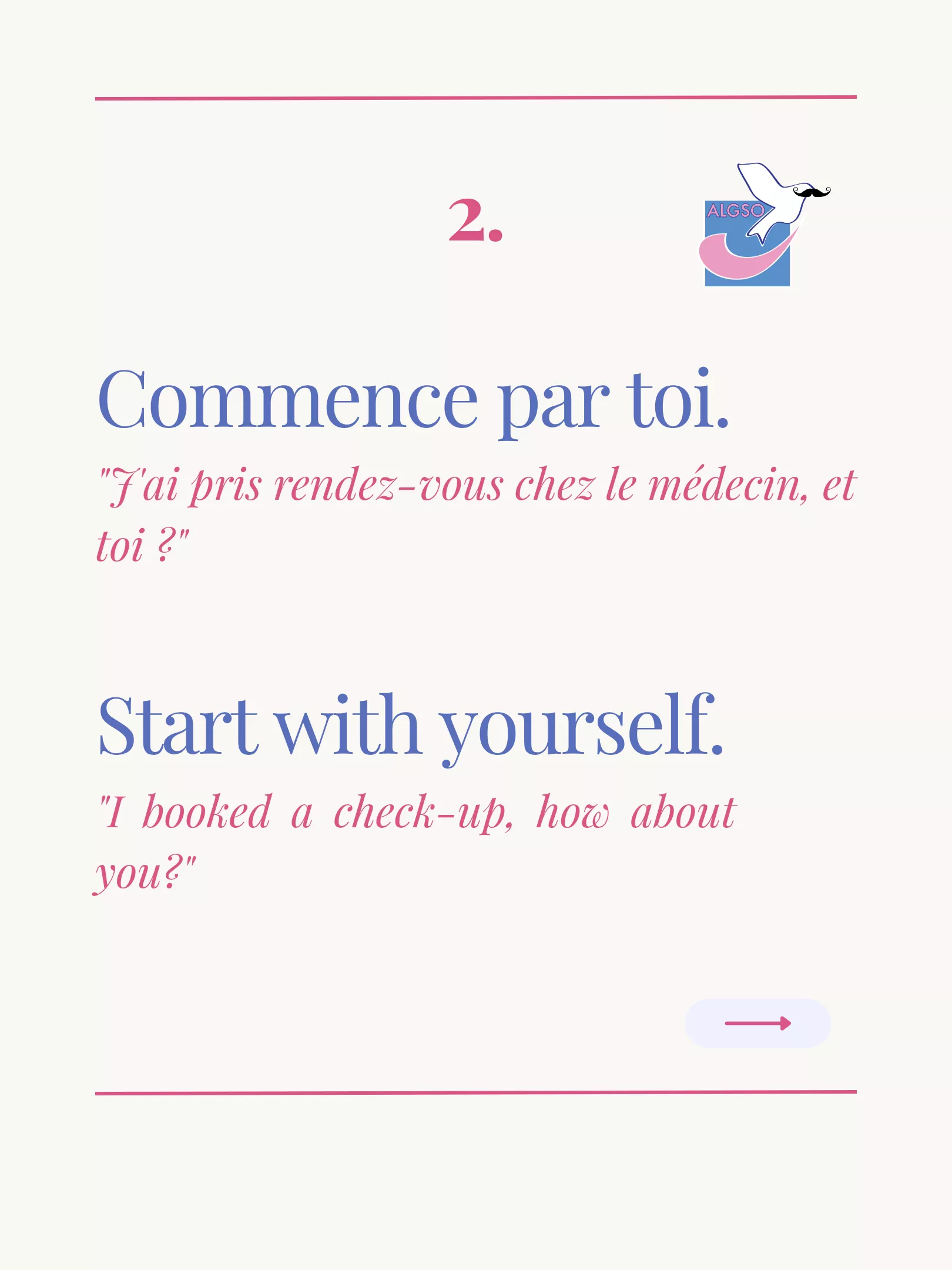
Go first.
Share something small about yourself. “I booked a check-up last week, have you had one lately?” does more than a long lecture ever could.
It shows that talking about this stuff is normal, and it gives the other person a way in without feeling like they’re being interrogated.It doesn’t have to be dramatic. “I’ve been sleeping badly and it’s driving me mad” or “I keep putting off the dentist” works fine.
Say something true, say it lightly, and then stop talking. The pause that follows is where the other person decides whether to join in, so give them room.Ask a real question.
“How are you, really?” works better than “Alright?” because it signals that, not only do you have time for the answer, but you genuinley care about what they might say.
Specific questions work even better, because they’re harder to answer with “fine”. “How have you been sleeping?” or “What’s been on your mind lately?” give the other person something real to respond to.
Pick your moment. Ask when nobody’s in a rush and nobody else is listening, not in a crowded room and not while you’re putting your coat on. Ask once, then wait. One question you genuinely want the answer to beats three in a row.Listen without fixing.
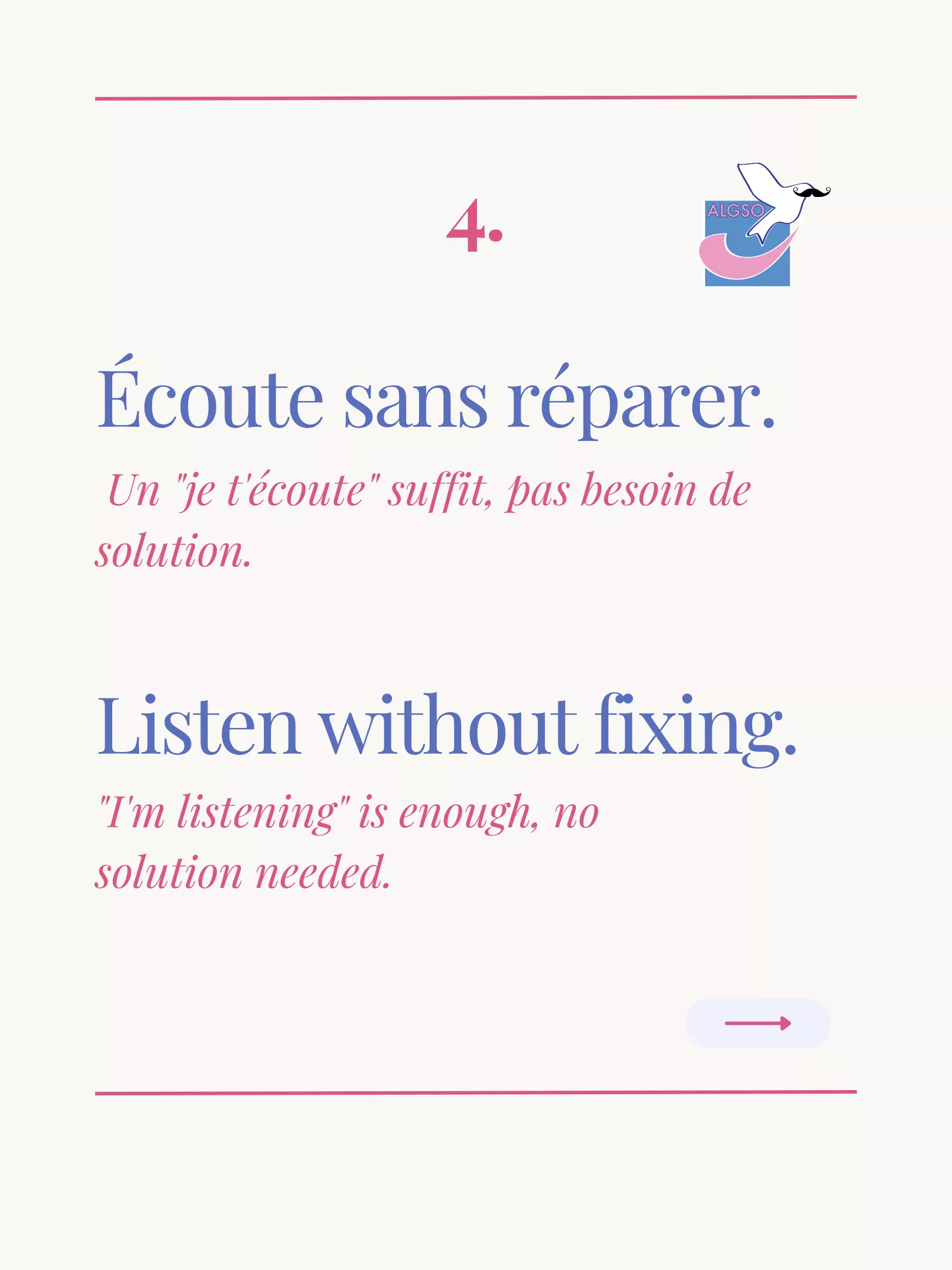
You don’t need a solution. “I’m listening” is enough. A hand on their arm, or shoulder, is enough.
Resist the urge to turn it into a to-do list, and resist the urge to compare (“my uncle had the same thing”), because that moves the spotlight away from them. Let the silences sit. Sometimes the real answer comes after a pause.Useful things to say are short: “That sounds like a lot.” “Tell me more.” “Thanks for telling me.”
It’s important to stay away from judgement. If you catch yourself about to say “you should”, stop and ask instead: “Do you want ideas, or do you just want me to listen?”Suggest a small step.
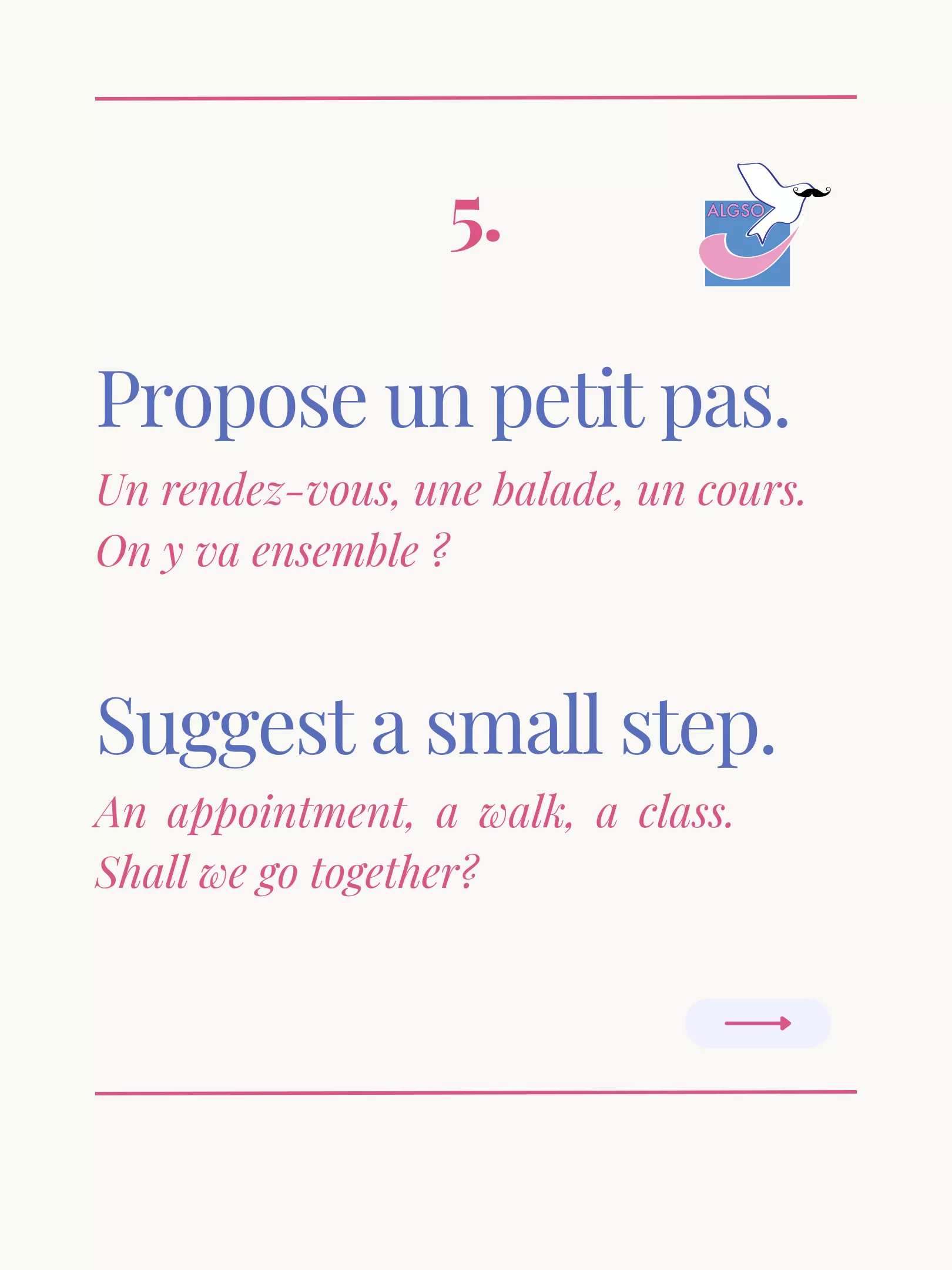
An appointment, a walk, a class. Offer to go along, and make it easy to say yes.
One small step is plenty. “Shall I book it with you?” or “I’ll come along and wait for you” is easier to accept than “you should see someone”.
If you want an easy first one, the ALGSO stand on 11 November is free and needs no booking (details below), so “fancy coming with me?” costs nothing.
Then follow up. A text a few days later, “how did it go?”, shows you meant it, and it’s often what makes a second conversation possible.

What if the answer is “I’m fine”?
Expect it, because it will happen. You ask a real question and get “I’m fine” or “all good”, often with a shrug and a quick change of subject. That’s a perfectly normal first answer. For lots of people “fine” is a reflex, said before the question has even landed, or a sign that this isn’t the right moment or the right place. It rarely means the conversation is over.
So don’t push, and don’t pretend you didn’t hear it. Take it at face value and leave the door open: “Fair enough. If that changes, I’m around.” Keep it light. A big “you can tell me anything” speech can feel like pressure, while a relaxed line lets the other person know the offer stands without having to defend their answer.
Then check in again in a week or two. A second, gentle ask can land better than a first, pushy one, if only because they’ve had time to think. Make it casual and specific: “Still sleeping badly?” or “How did that thing go?”. Remembering a detail from last time shows that you were really listening.
A few things worth avoiding:
- Asking the same question three times in one conversation.
- Telling them how they look (“you look awful”), which can put people on the defensive.
- Turning it into a debate about whether they’re “really” fine.
If it keeps going nowhere, try changing the setting. Many people find it easier to talk when they’re doing something side by side, like walking, driving or cooking, which is the idea behind way number 1 above.
And sometimes “fine” is simply the truth, which is good news. Either way, you’ve shown that you ask and that you’ll listen, and some people only take you up on that later.

When a chat should become an appointment
Sometimes the chat reveals more than a bad week. Someone mentions a lump, a pain that hasn’t gone away, or a symptom they’ve been quietly keeping an eye on for months. That is the moment to go from listening to helping them see a doctor.
A lump or swelling, blood where it shouldn’t be, pain or a cough that won’t go away, or weight loss with no obvious reason are all worth getting checked. Those are examples, not a checklist, and you don’t need to work out what it could be. That’s the doctor’s job.
Keep the tone calm and practical. Panic helps nobody, and neither does “it’s probably nothing”, which makes it easier to keep putting it off. Try something like “I’d get that looked at. Want me to help you book it?” Offer to make the call together, to go along, or to wait for them. A small, concrete offer is easier to accept than a general “you should get that checked”.
Expect some resistance. People put appointments off because they’re busy, nervous, or would rather not know. Take that seriously without arguing. Say you understand, that you’d probably feel the same, and that you’ll be there whatever the result is. Then pick a moment to come back to it: “Shall I check in on Friday?”
If something is sudden or severe, don’t wait for an appointment. In an emergency, go to the hospital’s emergency ward, or call 112.
ALGSO is not a medical service and cannot diagnose anything, so a GP or specialist is always the right next step.

Where movement fits in
ALGSO helps adults who have had or have cancer, of any type, move in a safe and judgement-free space. Whether you are in treatment, a long way past it, or somewhere in between, there is a place for you.
Our classes are led by trained professionals, and our community has been through it too. That combination matters. The coach knows how to keep you safe, and the person next to you already knows what a rough week feels like, so nobody has to explain themselves.
Sport can play a real part in recovery and in feeling at home in your body again. It helps with the physical side, and the emotional side is often the part people don’t expect. It also pairs nicely with conversation: it is hard to feel awkward when you are both busy stretching. If talking face to face feels like too much, doing something together gives you something to do with your hands, and the words often come more easily. As always, talk to your care team about what is right for you.
A yearly membership at ALGSO costs 50 euros and gives access to all of our classes. If someone you know could use a place like this, tell them about us, or bring them along on 11 November.
Click here to read up on the role sport plays in your cancer journey.

Come and say hello on 11 November
On Wednesday 11 November 2026, from 9:00 to 14:00, you will find the ALGSO stand on the first floor of the Hôpital Kirchberg, near the auditorium (9 rue Edward Steichen, L-2540 Luxembourg). It is part of the Hôpitaux Robert Schuman men’s cancer awareness day, and ALGSO takes part alongside the healthcare professionals and partners attending. Entry is free and no booking is needed.
Click here to find the exact details on this Movember awareness event.
Quick questions
Do I need to book?
No. Entry is free and no booking is needed. Come for five minutes or stay a while, whichever suits you.
Is the day only for men?
No. It is a men’s cancer awareness day, and everyone is welcome to come and talk to us. That includes partners, friends, sons, daughters and colleagues, and you don’t need to have had cancer to ask a question.
Do I need a moustache?
No. A moustache is, of course, optional.
Move with us
If this month made you want to move, find your people or take back control of your body and life, you can join ALGSO for a yearly membership of 50 euros, which gives you access to all our classes. Everything is on our membership page.
Move Together, Heal Together.

